

Why Jiu Jitsu May Be the Best Martial Art for Kids
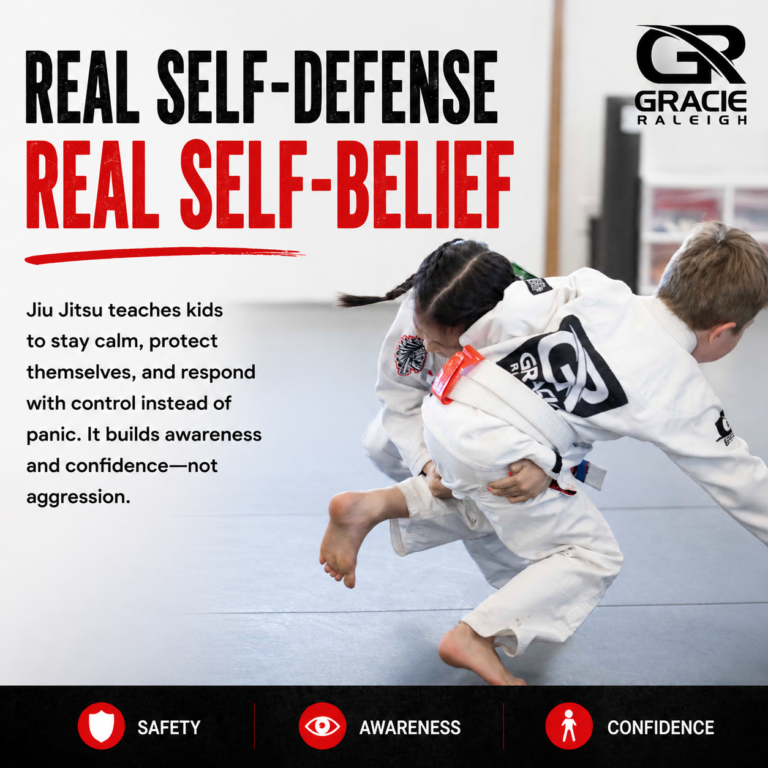
When parents think about self-defense, they often picture punches and kicks. But in a school environment, striking can escalate an altercation quickly and may create serious consequences—even when a child was not the one who started it.
A teacher, administrator, or camera may only see one student punching another. The context behind the altercation is not always immediately clear, and the optics of striking can make it more difficult to distinguish self-defense from retaliation.
That is one reason Brazilian Jiu Jitsu is uniquely suited for children.
A Different Approach Than Striking-Based Martial Arts
Unlike striking-based martial arts such as karate, Muay Thai, taekwondo, and boxing, kids Jiu Jitsu does not rely on punches or kicks to solve a physical confrontation. Instead, children learn how to use balance, positioning, leverage, escapes, and control.
Students learn how to:
- Maintain distance and avoid confrontation
- Establish clear verbal boundaries
- Escape grabs and dangerous positions
- Stay on their feet when someone tries to push or tackle them
- Control an aggressor without repeatedly striking them
- Create enough space to safely disengage
- Increase or decrease the amount of control being used as the situation changes
- Remain calm and make responsible decisions under pressure
That ability to escalate and de-escalate appropriately is one of Jiu Jitsu’s greatest advantages.
Self-Defense Is Not All-or-Nothing
Self-defense is not an all-or-nothing decision. A child may initially need to move away, use their voice, or create distance. If the aggressor continues, they may need to defend a takedown, escape a hold, or establish control. Once the threat stops, they can reduce the pressure, disengage, and seek help.
Jiu Jitsu gives children a range of responses rather than teaching them that every physical problem must be answered with maximum force.
This is especially important because bullies often choose children who are smaller, younger, or less physically confident.
Leverage Over Strength
When a child is significantly outweighed, getting into a punching or kicking exchange is rarely the safest strategy. A larger aggressor may be able to absorb more force, strike harder, and overpower the smaller child during a chaotic exchange.
Jiu Jitsu approaches the problem differently.
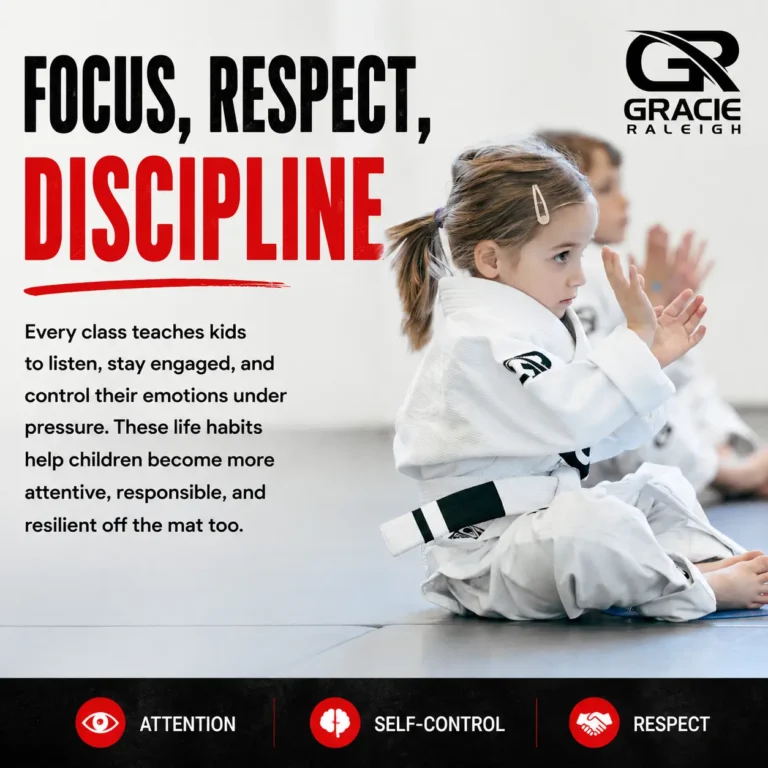
Rather than asking a smaller child to match strength with strength or power with power, Jiu Jitsu teaches them to use frames, angles, balance, timing, and leverage. The goal is to place the body in positions where technique can reduce the larger person’s physical advantages.
Leverage does not make size irrelevant, but it gives a smaller child a much more practical way to protect themselves against someone bigger and stronger.
Beyond Traditional Fights
Jiu Jitsu can also be useful in situations that are not traditional fights.
Imagine a sibling becoming overly aggressive during an argument or a child with developmental, sensory, or communication challenges becoming physically dysregulated. The goal should not be to punish them, strike them, or “win.” The goal is to stay safe, avoid causing unnecessary injury, create space, and get help from an adult.
A child trained only to punch or kick may have very few appropriate options once someone grabs them. A child with Jiu Jitsu experience may be better equipped to protect their head, maintain balance, escape a hold, create distance, or briefly control the situation without responding with strikes.
This does not mean children should attempt to restrain someone longer than necessary or use submissions outside the academy. It means they can develop the composure and physical awareness to protect themselves while using the least amount of force possible.
That distinction matters. Not every aggressive action comes from someone intentionally trying to cause harm. Sometimes a sibling loses control. Sometimes a child is overwhelmed and cannot communicate what they are experiencing. Jiu Jitsu gives students tools that can help them respond with control and restraint rather than anger and retaliation.
A child who punches another student—even in response to aggression—may be viewed very differently than a child who protects themselves, controls the situation, avoids unnecessary damage, disengages when possible, and waits for an adult to intervene.
Where Striking Fits In
So where does striking fit in?
We believe striking is a valuable self-defense tool in the right circumstances. It can be especially important when facing multiple attackers or when a person needs to create enough space to escape, regain their footing, or reconnect with their grappling skills.
When combined responsibly with wrestling and Jiu Jitsu, striking can help create a more complete and comprehensive self-defense system.
However, striking also requires greater judgment, emotional control, and an understanding of the consequences that can come with using it. For that reason, we reserve that portion of self-defense training for our teen and adult programs.
For younger students, we believe the best foundation begins with awareness, verbal boundaries, balance, escapes, positional control, and the ability to manage physical conflict without immediately resorting to punches or kicks.
Control Over Chaos
The goal of Jiu Jitsu is not to “win a fight.”
The goal is to stay safe, remain in control, and use the least amount of force necessary to stop the threat.
At Gracie Raleigh, we teach children that physical skills are a last resort. Awareness, confidence, verbal boundaries, walking away, and finding an adult always come first. But when a child cannot escape, they deserve the ability to protect themselves intelligently and responsibly.
Control over chaos. Leverage over strength. Confidence without aggression. Self-defense with responsibility.
That is why we believe Jiu Jitsu is the most practical martial arts foundation a child can learn.
Ready to See It in Person?
Gracie Raleigh’s Kids Jiu Jitsu program is built around exactly this philosophy — awareness, control, and confidence before contact.